Zoning

The Cathedral Area Preservation Association
The Cathedral Area's Premier Source for Neighborhood and Historic Preservation Information


603 Campbell

HISTORIC IMPRESSIONS
The house: Caleb Antram/Louis Booth home, 603 Campbell St.

Why it's important....
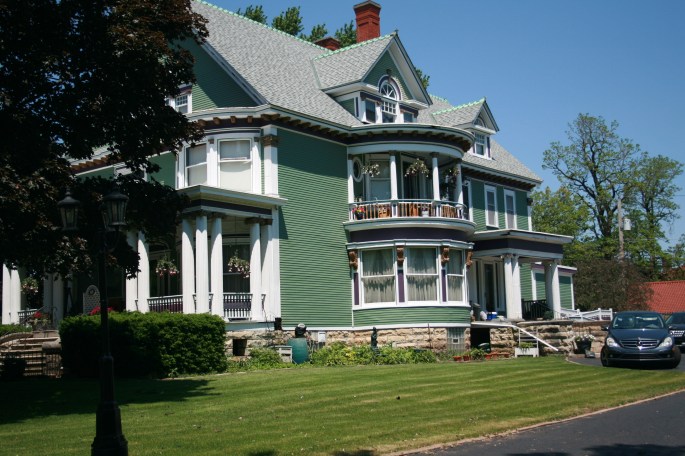
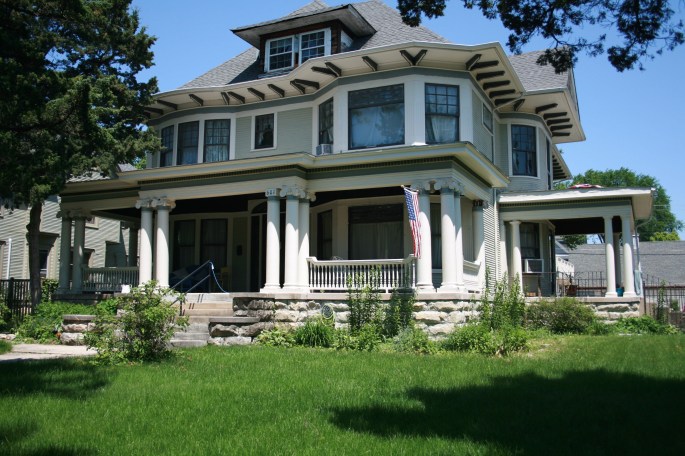
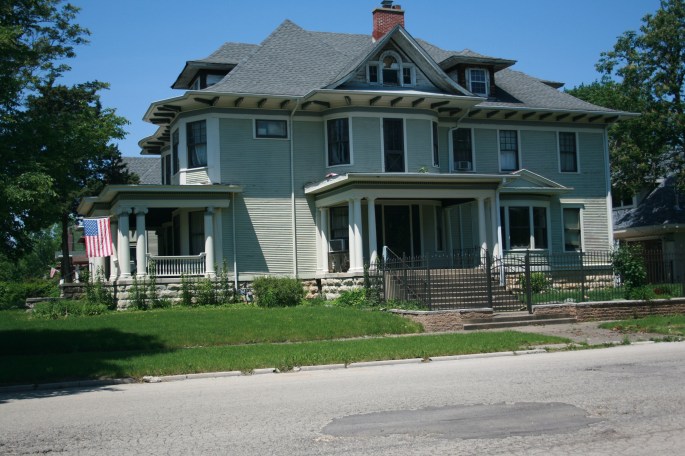
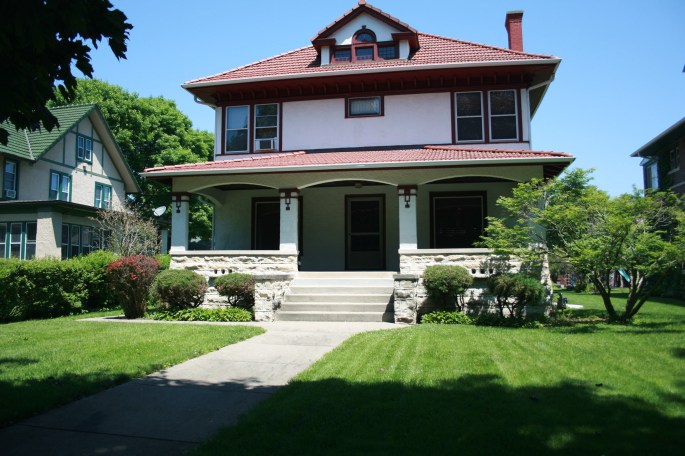
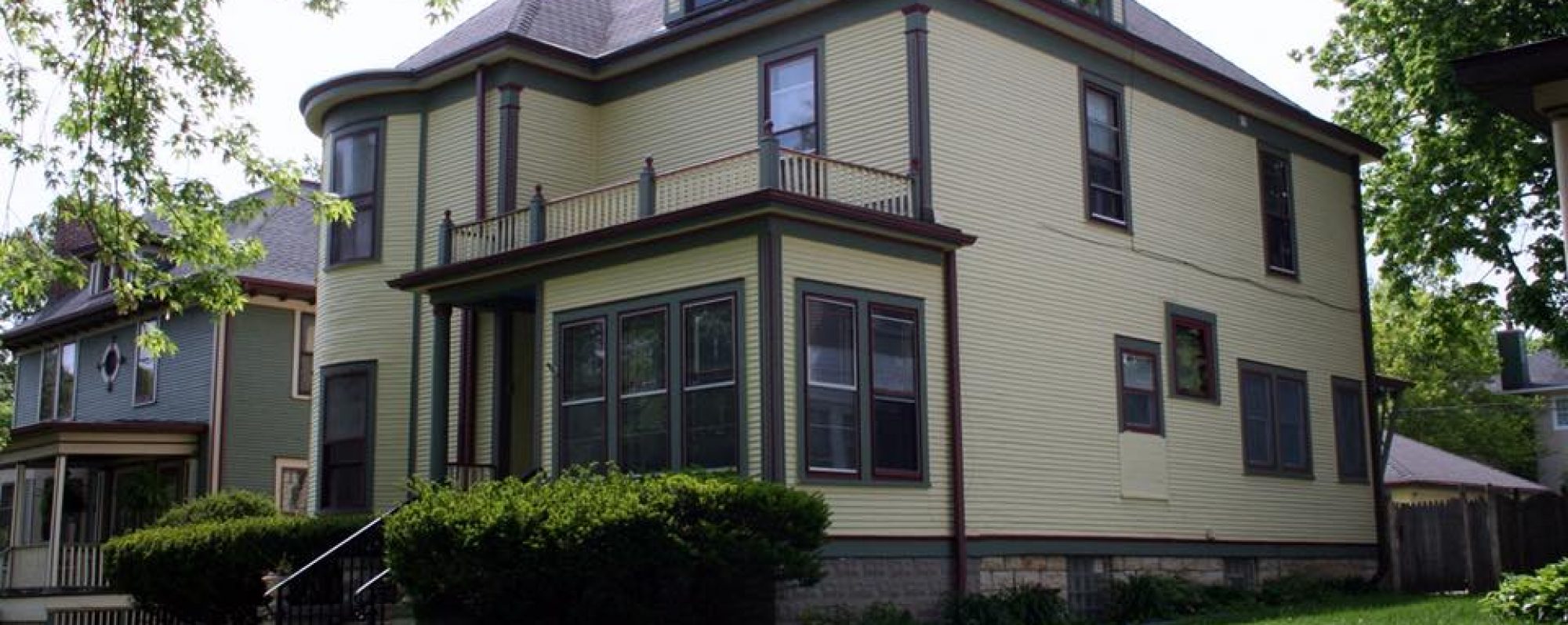
The home at 603 Campbell is the second home of prominent lawyer Caleb Antram, and home of American Steel and Wire executive Louis Booth. It also is an excellent example of a typical Edwardian home.

Style....
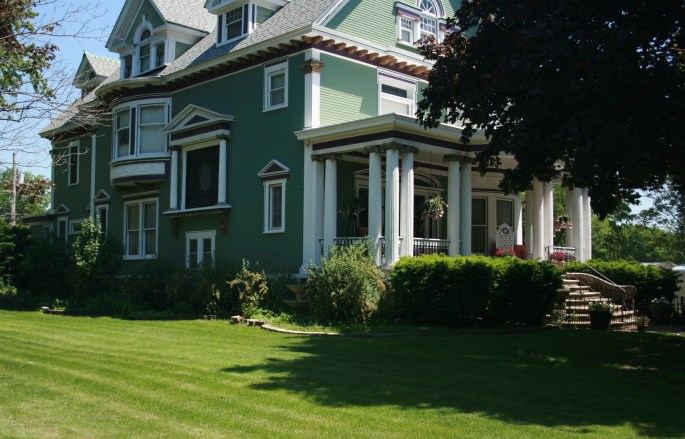
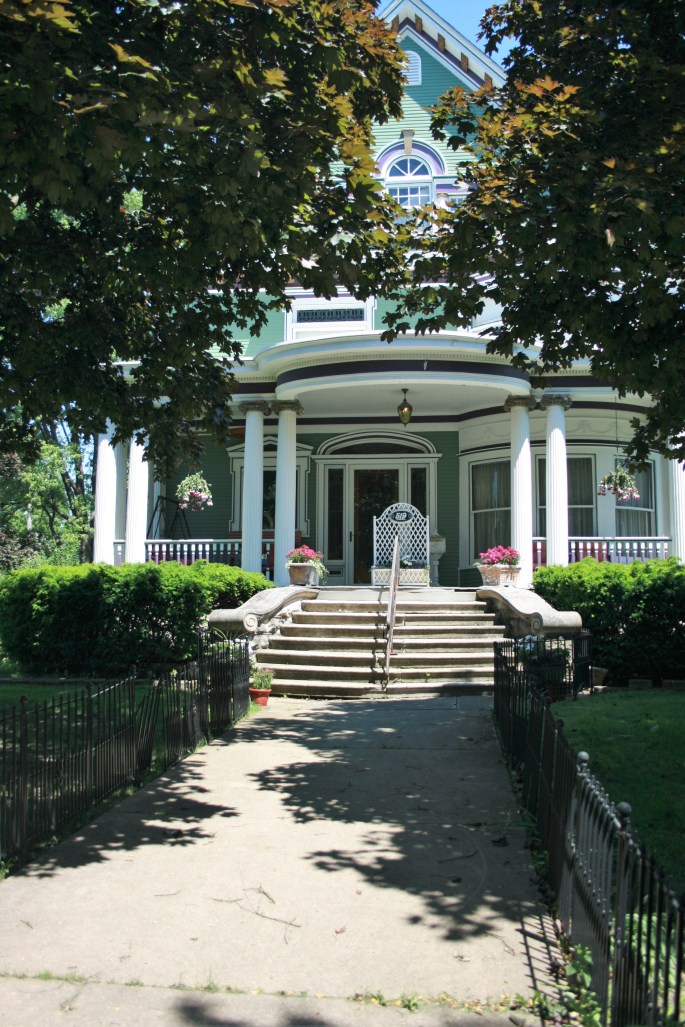
The Antram home is a typical early 20 th century blend of Queen Anne and Colonial Revival. The protruding front bay, steep roof and what was an original wrap porch all give the feel of late Queen Anne design. But the details such as the fan window in the front gable and the classical porch are decorative elements of the Colonial Revival.

The History....
The Antram/Booth home is an interesting home to research and document. Built as the 4 th home on that block of Campbell St in around 1910, it was apparently built by Caleb Antram. What makes this so interesting is the fact that for several years Mr. Antram had lived in the home at 601 Campbell which was built by Michael Adler.

Mr. Antram would only live in the home for a couple of years though. By 1914 he had moved yet one more house down, which was the old Flexer home. At this time the home was the residence of Louis Booth, superintendent for American Steel and Wire. Mr. Booth lived in the home until just after 1920. It appears perhaps with the short term living of Mr. Antram in the home, that it may have been built on speculation, and the Antram’s just lived in the home for the short term until a buyer could be secured.

To make the entire story a little more interesting, the home was then owned by Michael Adler, the same person who had built the larger home at 601 Campbell. So we see this incredible overlap of ownership in these three houses all next to each other.

The home would be converted into a multi unit home by the mid 1930s. Sherman Nadam was the owner at this time. The home would continue as a 2 unit up until the current owners took it back to single family.

Details....
The Antram/Booth home is full of many beautiful original details. Though it was altered into a 2 unit, many original details still survive. The front porch is a very nice classical porch supported on Tuscan Columns. This porch originally extended around the house on the east side to the protruding bay window.

Upon entering the interior, the apparent simple exterior is contrasted with a beautiful formal entry hall with all of the traditional decorative features. A large open staircase rises to the second floor, opposite this are the original parlor doors. The wood trim being a mix of original finish, and trim carefully stripped by the current owners. A pier mirror was added, which adds a special formal feeling to this area.

The large double parlor along the east side of the first floor was opened up to a single room at some time. Today the original wood trim is still intact, although the original fireplace is now gone. The floors in this room and the side study are of a different wood than the entry and back office, this is possibly because the main rooms were carpeted when built, or perhaps replaced when the rooms were combined.

The second floor was completely cut apart for use as a separate apartment, so many of the walls have been moved from their original location. To the rear of the second floor was found the closed in opening for the back stairs which were removed many years ago.

The People....
Caleb Antram was born near Salem Pennsylvania, February 12, 1865. In 1869 Caleb’s family moved to LaSalle county IL. His family was heavily involved in the Cumberland Presbyterian church. Caleb studied at Lincoln University, a Cumberland Presbyterian institution. He would further study at Valparaiso Normal School and eventually received his B.S. in sciences at Knox College in Galesburg IL in 1889. He would study law at Northwestern College, and graduated in 1891.

In September of 1891 he opened his office in Joliet. He was very successful in his practice. His specialty which occupied most of his time was probate and real estate law. A famous trip was made in 1896 to the old country to settle estate business. While on the trip he carried a letter of introduction from the Secretary of State which caused him to receive considerable attention in various cities. On June 30, 1897 he was married to Lillian B. Wormer of Albion Michigan. Mr. Antram also served as an elder at First Presbyterian Church.

In September of 1891 he opened his office in Joliet. He was very successful in his practice. His specialty which occupied most of his time was probate and real estate law. A famous trip was made in 1896 to the old country to settle estate business. While on the trip he carried a letter of introduction from the Secretary of State which caused him to receive considerable attention in various cities. On June 30, 1897 he was married to Lillian B. Wormer of Albion Michigan. Mr. Antram also served as an elder at First Presbyterian Church.

Today....
The home at 603 Campbell St is currently owned by Todd and Megan Gilkerson. The home was purchased by Todd in 1997 as an investment. He met Megan in 1999 and they were married in 2001. They lived on the first floor and rented the second floor. It was a couple years after this that they decided to take the home back to single family. Many simple projects seemed to snowball, and now several years later the second floor has been redone, and they are looking forward to starting bring the first floor back.

One of the hardest jobs was the stripping of the woodwork and staircase in the entry hall. This work let to an entire restoration of this room, and took 2 and half years to complete. As Todd puts it, “it is a hot and cold relationship with the house”. Many things have been surprises, however when they look at the quality of their old home compared to that of new homes there is no comparison according to both Todd and Megan. Their home truly is a labor of love.

Did you know?....
It was common to have portieres, or doorway drapery across the openings in the old homes, and commonly there would be drapery and doors overlaid. This is evident in this home, with the marks for the curtain rod still in the woodwork. This was a system for cutting down drafts in the homes in the winter months.